
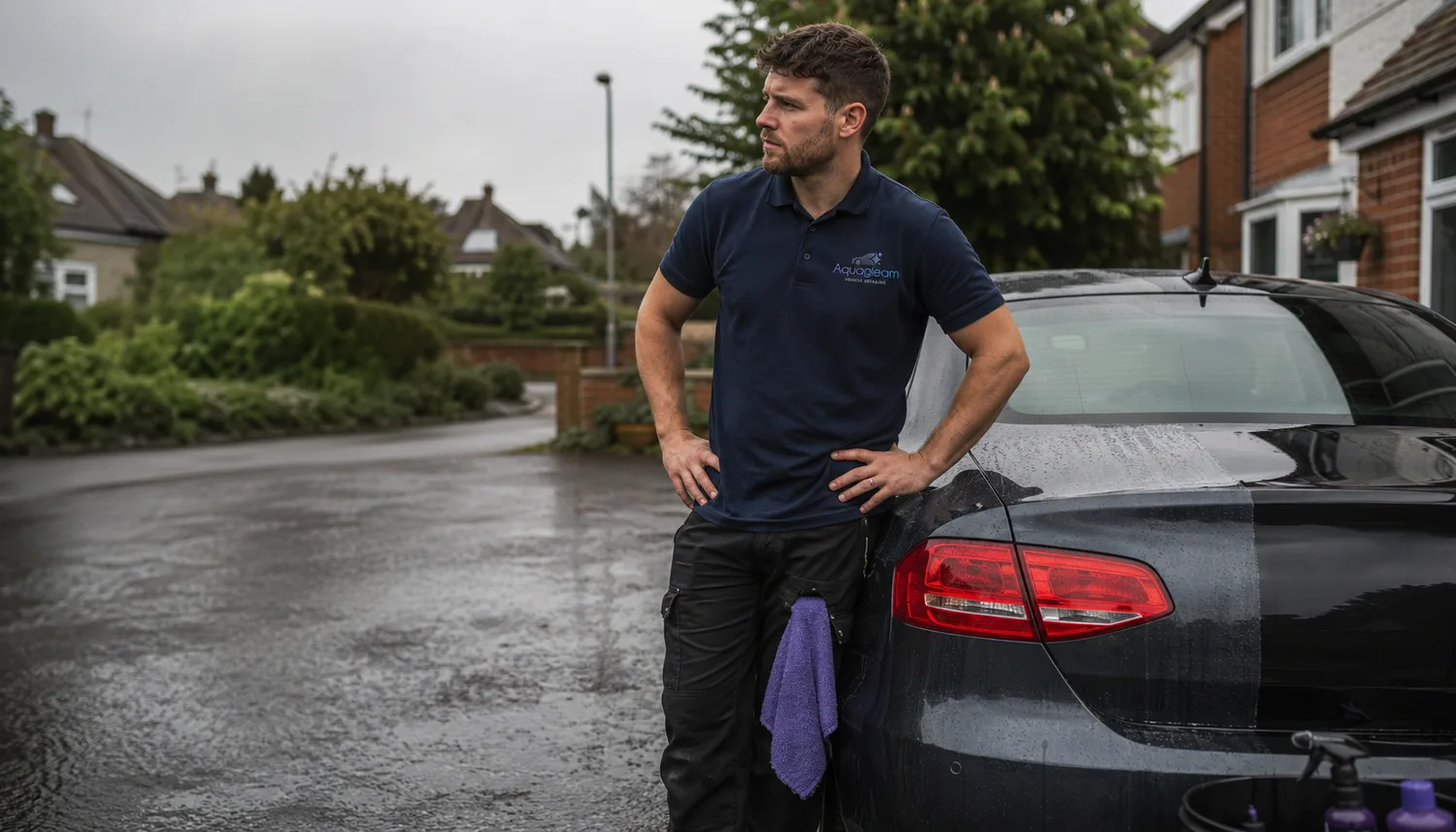
Mobile car detailing is a genuinely good business in the UK if you treat it like one — it has a very low startup cost (you can begin for around £250), no formal qualifications, and a realistic path to £40,000–£70,000 a year solo. But it only works if you price properly, survive your first winter, and build a base of repeat customers. It is a poor business if you compete on price, skip insurance, and run everything off WhatsApp.
"Is mobile car detailing a good business?" is the right question to ask before you spend a penny — and most of the answers online are either breathless hype ("£6,000 a month, easy!") or doom. The truth sits in between, and it depends almost entirely on how you run it. This guide gives you the honest version: what it actually costs, what you actually keep, the parts nobody mentions, and who it genuinely suits.
Quick answer
- Startup cost
- From ~£250 (lean) to ~£1,900 (full kit)
- Qualifications needed
- None to start (HMRC self-employed registration + insurance)
- Realistic solo earnings
- £40,000–£70,000/year gross, before expenses and tax
- Baseline hourly target
- ~£35/hour (covers costs); up to £90/hour on the right job
- Biggest risk
- Winter slowdown + unplanned costs (vehicle, equipment)
- What makes it work
- Premium pricing + repeat maintenance customers + simple systems
The honest case for mobile detailing
Very few skilled, self-employed trades let you start this cheaply. You don't need a unit, you don't need staff, and you don't need a branded van on day one. You need a pressure washer, a vacuum, a few chemicals, and the willingness to graft. DetailBook was built by a detailer who started with exactly that: a ten-year-old Karcher K2, a borrowed Henry Hoover, a handful of microfibres, and about £40 of consumables from Halfords — working out of the back of a Vauxhall Corsa. The point isn't that you should start that lean. It's that you can.
The other genuine advantages:
- No qualification barrier. You can start this week and learn as you go. Paid training in machine polishing and ceramic coatings pays off later, but it's not a gate you have to pass first.
- A real earnings ceiling. A maintenance wash might be £40–£80, but a full detail is £120–£250 and paint correction or ceramic work runs into the hundreds. On the right job, an experienced detailer can clear £90 an hour.
- Flexibility and control. You set your own hours, your own standards, and your own prices. For a lot of people that freedom — being able to take a Wednesday morning off without asking a boss — is the entire reason they start.
- Repeatable demand. Unlike a lot of services, car detailing never goes out of style. As long as people own cars, they'll want them kept clean — and a good chunk of that becomes recurring work.
What the numbers actually look like
Here's where the hype falls apart. Someone hears you charge £160 for a four-hour detail and thinks: "£40 an hour — eight hours a day, five days a week — that's £1,600 a week, the bloke's minted."
What they don't see is everything that comes out of that number. A useful comparison: a doctor on £40 an hour earns £40 for every hour they're at work, nine hours a day, rain or shine, patients or no patients, with no business costs. A mobile detailer only earns while actually detailing — no paid lunch, no income on the icy days, nothing when a customer ghosts. The salary doesn't land regardless. That's the difference between employed and self-employed nobody mentions at the careers fair.
So the right way to price isn't "what's everyone else charging?" — it's "what do I need to earn per hour to cover all of this and still make a living?" A sensible baseline for a UK solo detailer is around £35 an hour, because out of it you're covering:
| Hidden cost (UK, solo detailer) | Typical figure |
|---|---|
| Van insurance | £800 – £2,000/year |
| Public liability insurance | £300 – £500/year |
| Fuel | £40 – £60/week |
| Chemicals & consumables | £15 – £50/month |
| Equipment wear (hoses, brushes, vac) | £30 – £50/month |
| Phone, software, banking | £40 – £70/month |
| Tax + National Insurance | ~30% of profit set aside |
| Sick days, no-shows, bad weather | £0 earned — but costs continue |
Run those properly and the picture is still good — with the right pricing, two or three solid days a month cover your overheads and the rest is profit. But it's a long way from "£1,600 a week in my pocket." The detailers who fail aren't usually bad at cleaning cars. They fail because they price like the cheapest option, attract customers who haggle, stay permanently busy, and still end up skint. Being busy but broke is not a badge of honour.
The pricing trap that catches most beginners
Starting cheap feels logical — undercut everyone, fill the diary. The problem: a delighted bargain customer recommends you to friends who all expect the same rock-bottom price, and you spend a year trying to climb out of it. Double your prices and lose half your customers, and you earn the same money for half the work. That's not a loss — that's buying back your time. Read more in our guide to pricing car detailing services in the UK.
The parts nobody mentions
If you only read the highlight reels on Instagram, you'd think every detailer has a £1,200 pressure washer and a spotless van. The reality of running the business has some sharp edges worth knowing before you commit.
Costs arrive in waves
It's rarely a steady drip. One real example from the founder's own first couple of years: a cracked windscreen on a customer's van in freezing weather (insured, and luckily the van was booked in for a new screen anyway), then a faulty injector that killed the van a week later (£450 with recovery), then the clutch master cylinder going two weeks after that (£315 and three lost days). That's £765 and several days' income gone inside a fortnight. It wasn't bad luck out to get him — it was just the normal lumpy reality of running a vehicle-dependent business. The lesson: keep a buffer. Putting aside 5% of every job into an "equipment and emergencies" pot turns a disaster into an inconvenience.
Winter tests everyone
From around October, the phone goes quiet. The clocks change, the weather turns, and customers think "what's the point, it'll be dirty tomorrow." Plenty of new detailers panic and slash their prices, which only digs the hole deeper. The ones who get through it reframe the service: in winter it's about protection, not perfection — ceramic protection against road salt, interior sanitisation, stopping leather cracking in the cold, sorting foggy windows. Same service, different message, and the bookings come back.
It rarely pays off overnight
This is the most honest bit. Marketing in this trade is a slow burn. Two weeks of hard graft on social media and content might land you one timewaster and one small job that week — and then, months later, a blog post finally ranks on Google, a Facebook comment turns into a £100-a-month regular five weeks after you wrote it, and someone books because they've "seen you all over Facebook." The work compounds quietly. If you need instant results, this will frustrate you. If you can keep showing up when the results aren't immediate, you're already ahead of most people who quit.
So — who is it a good business for?
It's a good business for you if:
- You're willing to treat it like a real business from day one — turn up early, communicate professionally, send proper invoices, keep records of every customer.
- You can hold your nerve on price instead of racing to the bottom.
- You actually enjoy the transformation — taking something tired and neglected and making it look fresh again. (You don't need to be a "car person." Plenty of great detailers aren't; they just love the before-and-after.)
- You can take rejection and slow patches without spiralling.
It's probably not for you if you want guaranteed, immediate, hands-off income, or if you're only in it to undercut the local competition. That version of the business burns people out fast.
What actually makes it sustainable
The detailers who build something lasting (rather than just buying themselves an exhausting job) tend to do three things.
1. They lead with value, not "what can I get?" One free clean for a local hospice — done purely to help — led to a viral local Facebook post, then paid work, then a regular on a monthly maintenance plan, then referrals. Total earned from that single free job over time: over £2,700. You never know who's watching.
2. They build a base of repeat customers. One regular on an £85 maintenance clean every four weeks is over £1,000 a year from roughly twelve hours of work — and it's the work that keeps the diary full through the quiet winter months. Keeping a customer is far cheaper than winning a new one.
3. They put simple systems in early. Booking via WhatsApp works for a month, then breaks: missed enquiries, double-bookings, no-shows, and an evening of admin every day. An online booking page that takes deposits, sends reminders, and keeps customer records turns enquiries into confirmed jobs while you're working on someone else's car — including, genuinely, while you're asleep.
The booking system built for detailers, by a detailer
DetailBook is a UK booking and CRM platform for car detailing businesses — online booking, deposit collection, automated reminders, and customer records. It takes 0% commission on your bookings, and starts at £25/month, with deposit collection on the £50/month Pro plan. Set up in about 15 minutes.
See how DetailBook works →The verdict
Is mobile car detailing a good business? Yes — one of the best low-cost trades to start in the UK — if you go in with your eyes open. Price like a professional, sort insurance before your first job, expect winter and the lumpy costs, and treat it like a business from your very first customer. Do that, and it can genuinely pay your bills and give you a level of freedom most jobs never will. Go in chasing easy money and competing on price, and it'll grind you down. The trade isn't the variable. How you run it is.
This article is general guidance for people considering a UK car detailing business and does not constitute financial, tax, or insurance advice. Earnings and costs vary by region, skill, and how the business is run. Always check the latest GOV.UK guidance, speak to a qualified accountant about your tax position, and get insurance quotes from regulated providers before you start trading.